
What Is a Percolation Test, and Do You Need One?
What a percolation test actually measures, when building control or a soakaway design calls for one, and what a short site visit involves.
The Short Answer
Not always. You need a percolation test if a new soakaway, septic tank or treatment plant has to be sized properly, or if building control or an engineer has asked for one before signing a drainage design off. If your garden already drains fine and nothing new is going into the ground, you probably do not need one at all.
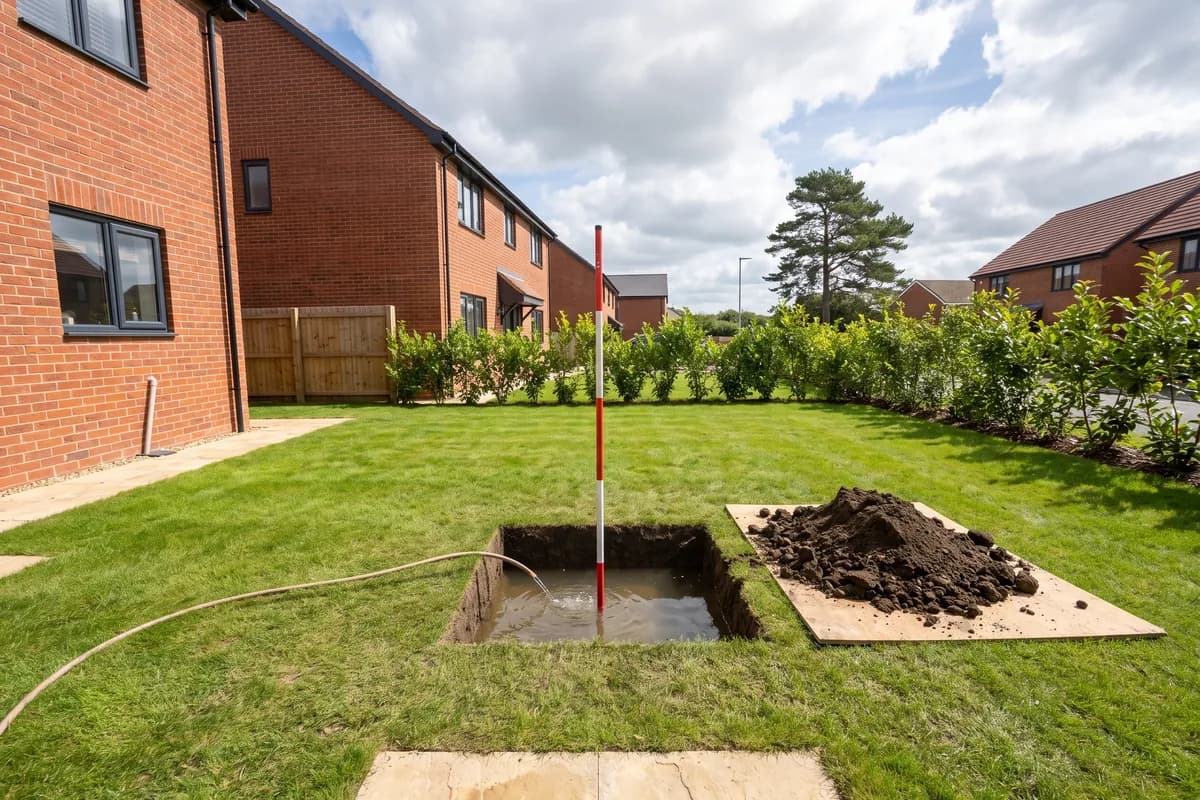
A percolation test is not groundwork. It is a set of trial pits dug where the drainage is planned, filled with water, then timed as the level drops. That reading tells us how fast the ground actually absorbs water, which is the number a soakaway or a treatment plant's drainage field gets sized around. Skip it and that size is a guess.
It comes up in three situations most often. A garden that floods or a patio that puddles after ordinary rain, where the real question is where the water is going, not how much rain fell. A plot being built on, where building control wants a tested soakaway before it will sign the drainage off. And a septic tank or treatment plant, where a percolation result is usually what proves the ground can take the drainage field it needs.
The test itself is a short visit. Pits are dug at the depth the drainage will actually sit, filled, timed and reinstated the same day. Nothing gets built on the back of it until the reading is in, so there is no risk of paying for a soakaway that turns out to be the wrong size.
A trial pit is small and gets backfilled the same visit, not a dug-up garden for a week. The point of testing first is the opposite of upheaval: it is what stops you paying twice, once for a soakaway sized on a guess and again for the one that actually has to go in once the guess fails.
We run the test, the design and the install as the same team, rather than handing the job between a driveway contractor and a separate drainage subcontractor. Everything we lay is covered for two years. If a run does not perform the way the test said it should, we come back and sort it.
The Guesswork This Removes
Skipping the test and sizing a soakaway by eye is how a lot of failed drainage happens. Undersize it and the first heavy winter puts the water right back where it started. Oversize it and you have paid to dig and fill a hole bigger than the ground needed. A percolation test removes that guesswork before anything gets dug. The trial pit gives an actual infiltration rate, and the soakaway, run or treatment plant gets designed to that number rather than to a rule of thumb. It is a short visit that saves a second dig-out later.
Signs You Might Need One
The situations this comes up in most.
Your Garden Floods After Normal Rain
Standing water that will not soak away on its own, especially if a previous fix has not stopped it, usually means the ground has never actually been tested.
You Are Installing A Septic Tank Or Treatment Plant
A percolation test is what proves the ground can take the drainage field, and it is usually what a building control or sign-off decision is based on.
Building Control Has Asked For One
A soakaway on a new driveway, extension or plot often needs a tested infiltration rate before the drainage design gets approved.
An Existing Soakaway Was Never Tested
If nobody has ever measured how fast that ground actually drains, the soakaway underneath it was sized on a guess, not a result.
What Happens During A Percolation Test
A short site visit before anything gets designed.
Trial Pits Dug
One or more pits are dug at the depth the drainage will actually sit, in the spot the soakaway or drainage field is planned for.
Pits Filled And Timed
Each pit is filled with water and the drop is timed. That reading is the actual infiltration rate for that ground, not an estimate.
Soakaway Or Drainage Field Sized
The result decides how big the soakaway or drainage field needs to be. Too small and it floods again. Too big wastes a dig-out that did not need to happen.
Reinstated And Signed Off
Pits are backfilled and the ground reinstated the same visit. Where building control or a septic system needs paperwork, that gets provided too.
Percolation Test Questions
What people usually ask once they know they need one.
What actually is a percolation test?
Trial pits dug where the drainage is planned, filled with water and timed as the level drops. That timing tells us how fast the ground takes water, which is what a soakaway or a treatment plant's drainage field has to be sized around.
How long does a percolation test take?
The test itself is a short visit, not a groundworks job. Pits are dug, filled, timed and reinstated the same day. It is worth pricing separately from the soakaway or drainage work it leads to, since it does not need the same time on site.
Will a percolation test satisfy building control?
Where the job calls for one, yes. We provide the paperwork alongside the result, which is generally what a builder or building control officer needs before they will sign a drainage design off.
Do I need a percolation test just because my garden floods?
Not always. A flooding garden is usually about where the water is coming from and where it has been sent, not how much rain fell. A test is the way to find out whether the ground itself is the problem or whether it is a drainage run that needs fixing first.
What happens after the test?
The result decides what gets built next, whether that is a soakaway, a land drain, a channel drain or the drainage field for a treatment plant. We design and install it as the same team that ran the test, so nothing gets handed between contractors.
Where This Leads
The services a percolation test usually feeds into.
 01
Drainage, Soakaways & Percolation Testing
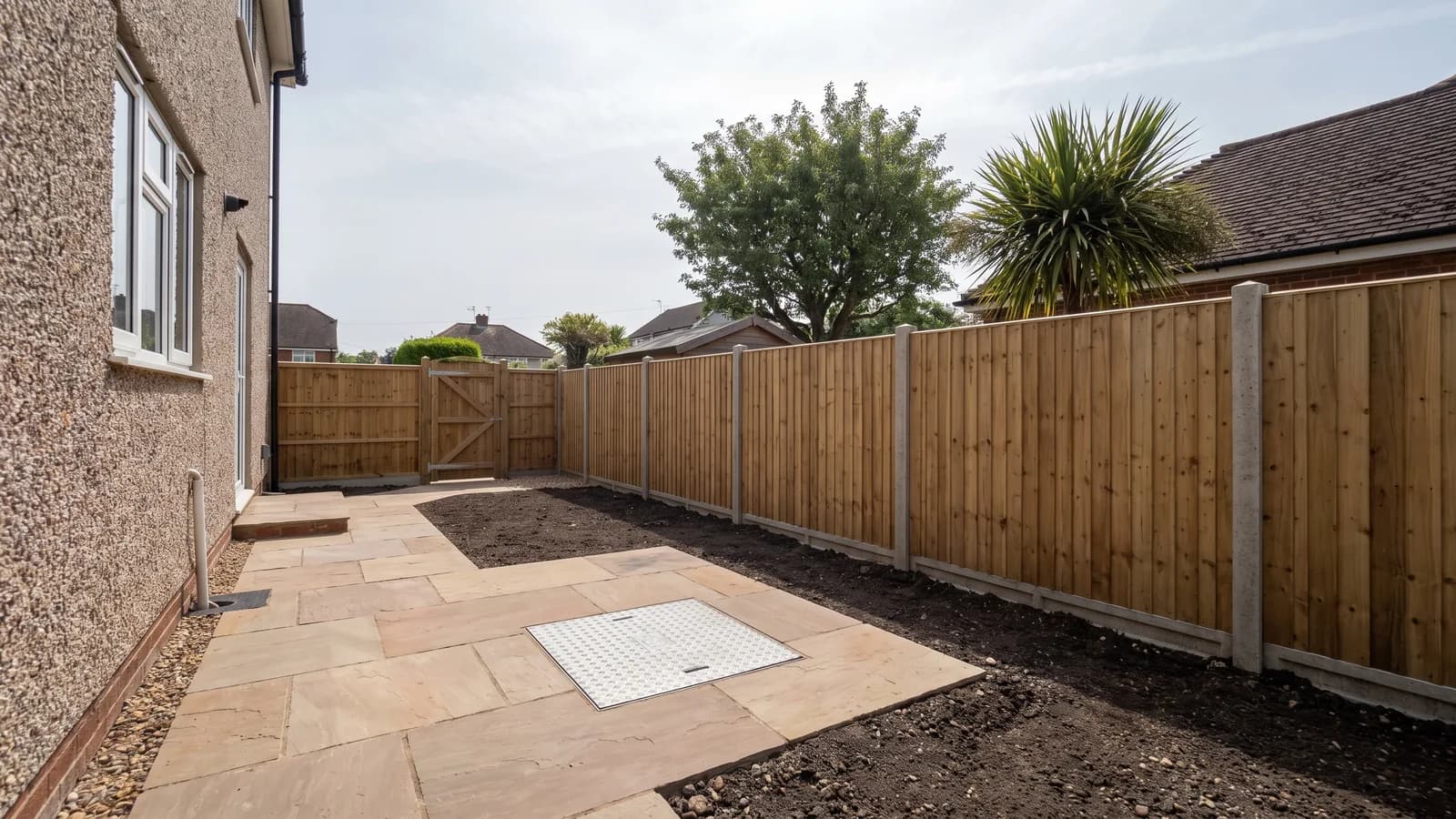
Percolation testing, soakaway design and the land drains, channel drains and connections that follow it.
Learn more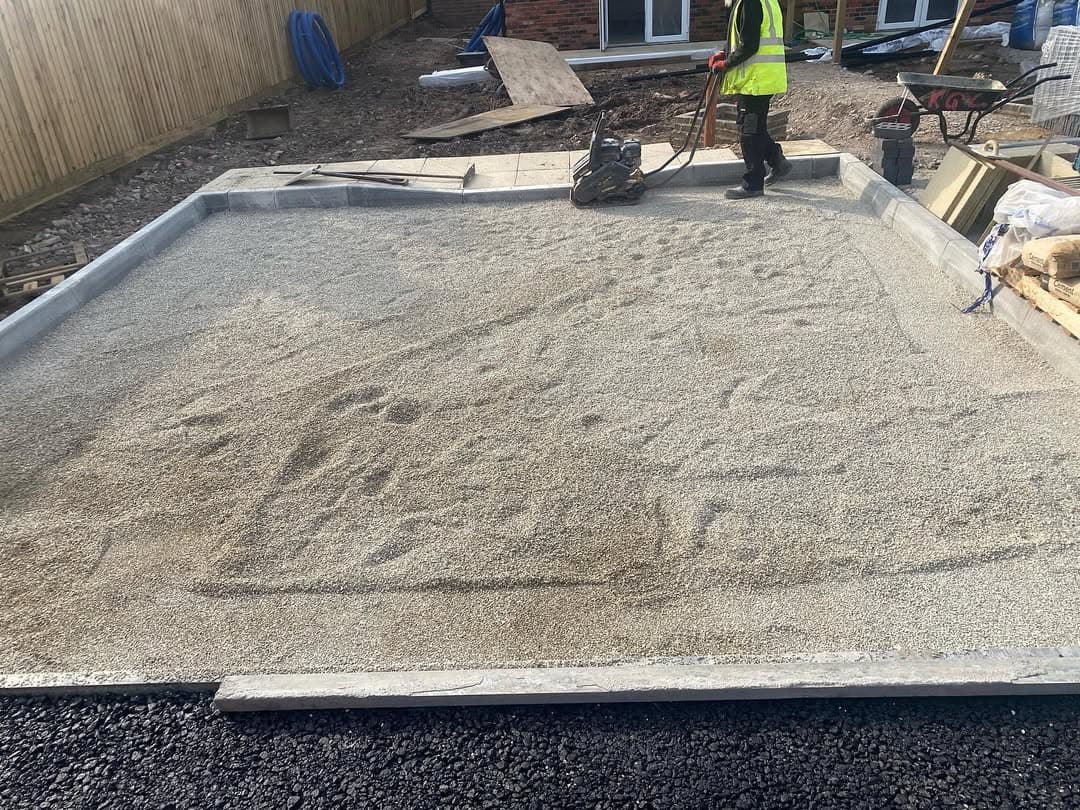 02
Groundworks & Civils
Excavation, foundations, footings and the muck away that comes with getting a plot ready to build on.
Learn more 03
Driveways & Patios
Block paving, tarmac, concrete and porcelain, laid on a sub-base with the drainage already designed in.
Learn more
Get a free quote
Tell us what you need and we'll come back with a price. No pressure, no hard sell.
Prefer to talk? Call Four Groundworks & Landscaping on 07886 075828