
Block Paving Sinking: Why Driveways and Patios Sink, and How to Stop It
What causes a driveway or patio to sink or go uneven, and what stops it happening again. Written for anyone weighing up a repair against a full rebuild.
The Sub-Base Is Almost Always the Reason
Block paving sinking, or a patio that has started to dip and go uneven, comes down to one thing almost every time: the ground underneath it has moved, because the sub-base was too thin, was not compacted properly, or was never put down as a proper layer in the first place. It is very rarely the blocks or slabs themselves. A block paving driveway or a patio is only ever as good as what is underneath it, and the part nobody sees once the job is finished is the part that decides whether it is still level in five years.
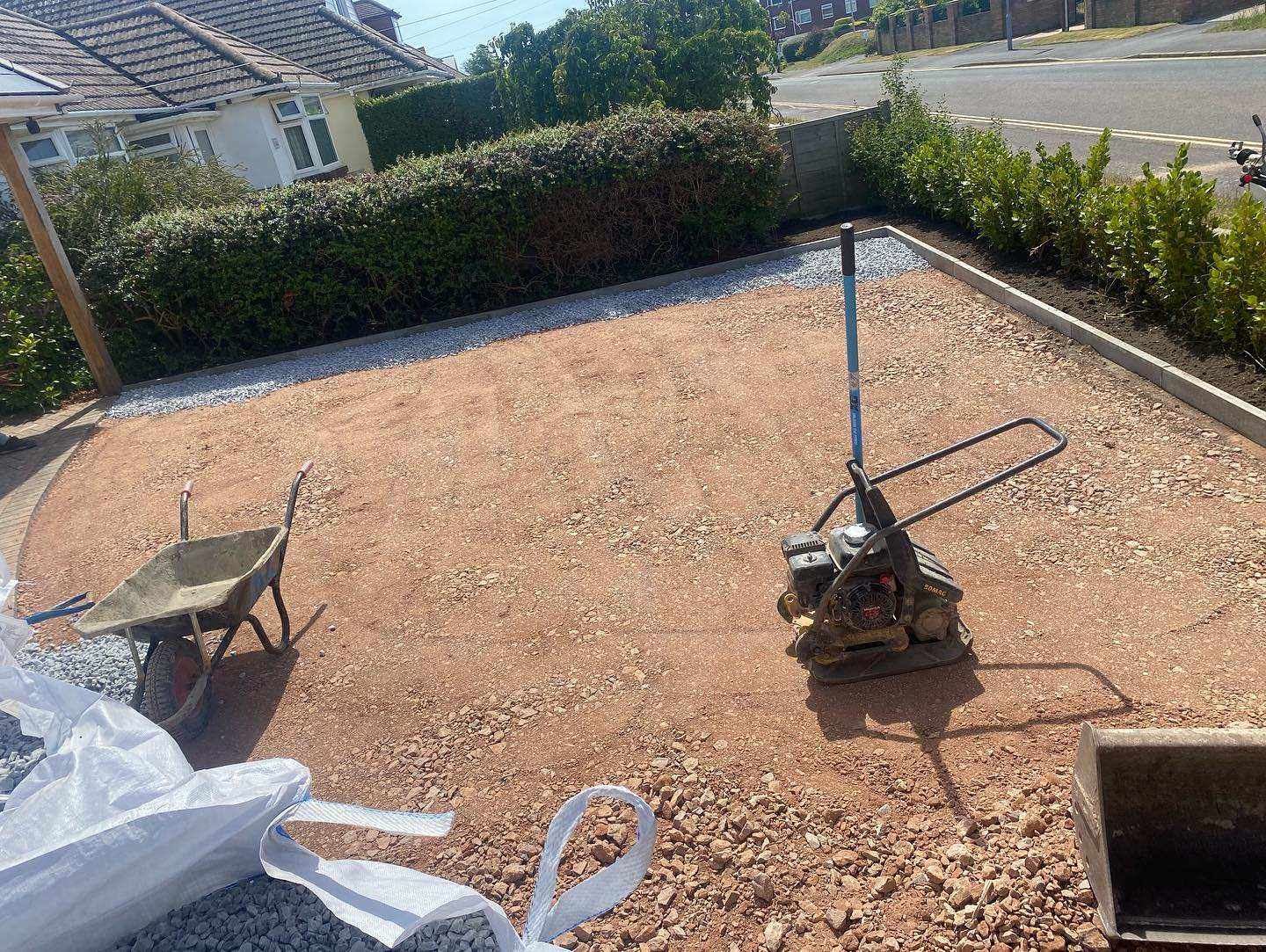
A proper sub-base is dug out to the right depth, laid in layers, and compacted before the next layer goes down. Skip a layer, rush the compaction, or dig it too shallow to save time, and the ground underneath keeps settling long after the surface looks finished. That settling is rarely even, because the ground under a garden or driveway is never uniform. A patch that was disturbed for a soil pipe, backfilled after an extension, or built up with whatever spoil was to hand compacts differently to ground that was never touched, and the difference works its way to the surface over a winter or two. Water makes it worse. If the falls, the slight slope built into the surface to move rainwater off it, were not set correctly, water sits instead of draining away. Standing water softens whatever is underneath and washes the finer material out from between the joints, which is usually what finishes off a sub-base that was already weak.
Most local landscapers sub the digging and sub-base out to someone else and lay the surface on top of whatever has been left for them. We do not. The same team that quotes the job does the dig-out, sets the levels, builds the sub-base in compacted layers and gets the falls right, then lays and joints the surface itself, which is why it stays level rather than just looking level on the day. If a driveway or patio has already started to sink, a small area can sometimes be lifted, the sub-base underneath corrected, and the same blocks or slabs relaid. Once the problem has spread across more than one area, or the sub-base was never really there to begin with, a proper dig-out and rebuild is the honest answer, even though it is the more expensive one to hear.
What a Failing Sub-Base Actually Looks Like
The signs to look for before it gets to a full rebuild.
When a Repair Is Enough, and When It Is Not
An uneven patio fix usually comes down to how much of it has moved. Where the dip is confined to one area, that section can be lifted, the sub-base underneath corrected, and the same slabs relaid. Where the dipping runs across a wider area, or joints are opening up and blocks are rocking underfoot in more than one place, that points to a sub-base that was never built to depth in the first place. At that point patching one corner only moves the problem to the next one, and a proper dig-out is the more honest job to recommend.
The Four Things That Stop Driveway and Patio Sinking
None of them are visible once the job is finished.
Dug to the right depth
Not just deep enough to look right on the day. The sub-base needs enough depth to carry the loads it will actually see, driveway or patio.
Compacted in layers
Each layer is compacted before the next goes down, not all at once at the end. That is what stops it settling later.
Falls set on purpose
A slight fall built into the surface sends water off it instead of letting it sit and work its way into the joints.
Edge restraint that holds
A solid edge restraint stops the blocks or slabs creeping outward under load, which is what lets joints open up over time.
Common Questions About Sinking Driveways and Patios
What people ask us before booking a repair.
Can a sunken driveway be fixed without replacing the whole thing?
Sometimes. If the dip is confined to one area, the affected section can be lifted, the sub-base underneath corrected, and the same blocks relaid. Where more than one area has gone, or the edges are moving too, a full rebuild is usually the better spend.
Why has my patio only started sinking in its second or third year?
That is typical. A sub-base that was too shallow or under-compacted can hold for a season or two before the ground beneath finishes settling. It is not new damage, it is the original build catching up.
Does tarmac sink for the same reason as block paving?
Yes. Tarmac, block paving and porcelain or natural stone patios all sit on a sub-base, and all three fail the same way when it is wrong: thin, poorly compacted, or missing the falls to shed water.
Will a new driveway sink again if it is relaid on the old sub-base?
It can, if the old sub-base is the reason it sank in the first place. We dig out and rebuild the sub-base properly rather than lay a new surface on a base that has already proven it does not work.
How long does a driveway or patio rebuild take?
Most standard driveways are finished inside a week, from dig-out to the final walk-round. A patio rebuild is usually quicker, depending on size and access.
Driveways and Patios, Built on a Sub-Base That Holds
The service this guide is about, and the ones that go with it.
 01
Block Paving & Patios
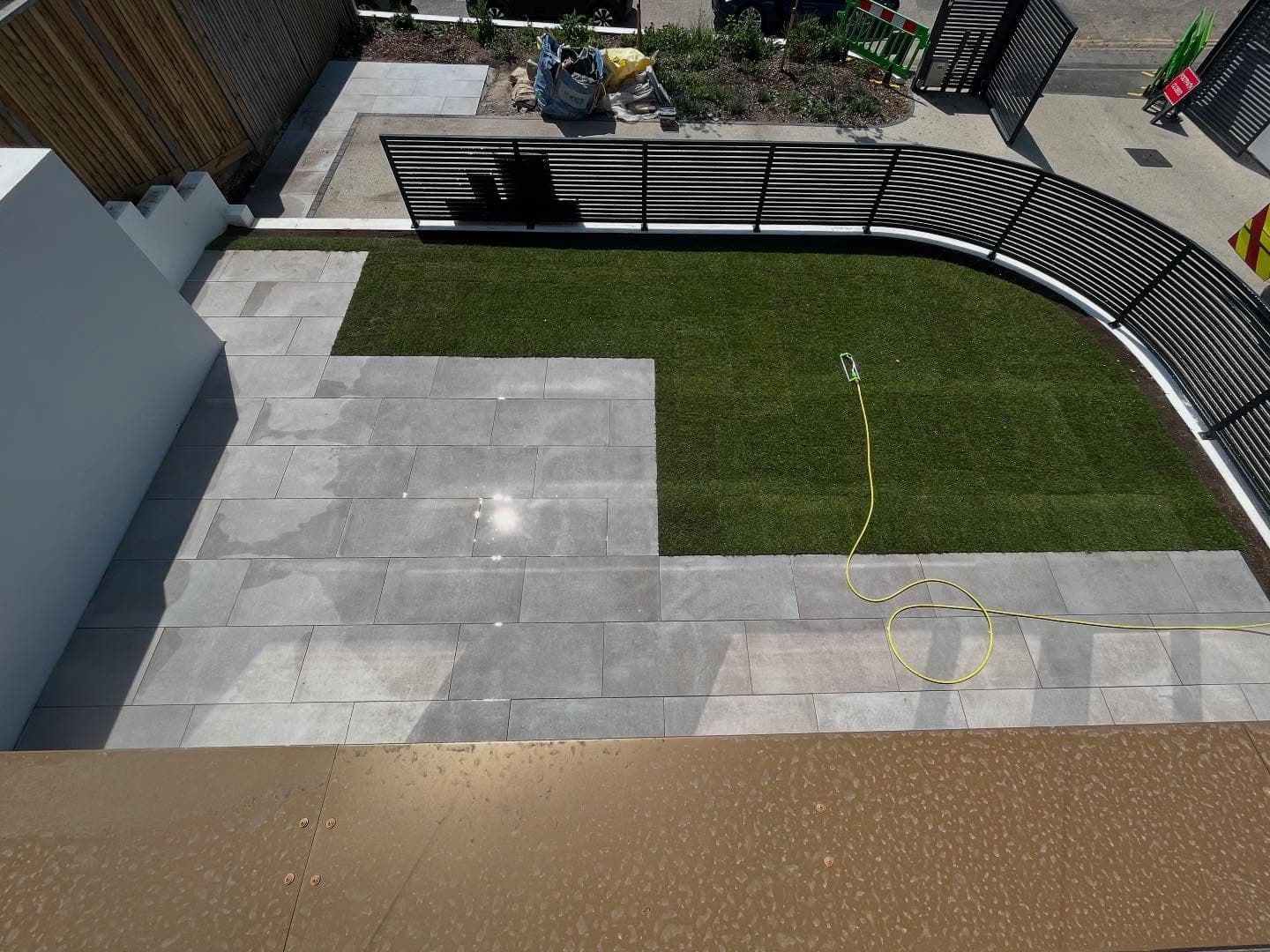
The full build: dig-out, sub-base, falls and jointing, done by the same team start to finish.
Learn more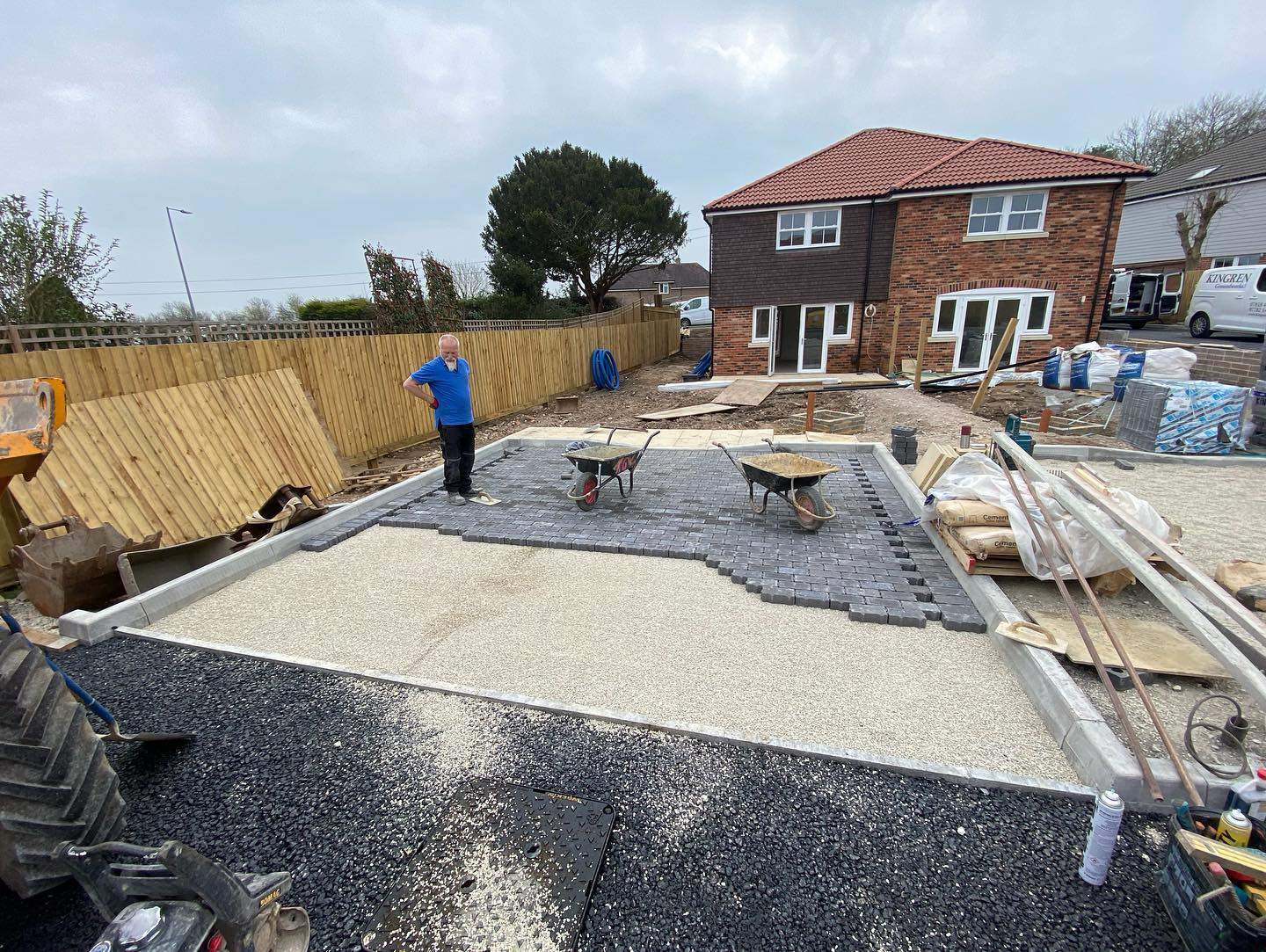 02
Driveway & Patio Repairs
Where the problem is a section that has already started to dip or open up, not the whole surface.
Learn more 03
Drainage & Soakaways
For when standing water is part of what caused it, sized from an actual test rather than a guess.
Learn more
Get a free quote
Tell us what you need and we'll come back with a price. No pressure, no hard sell.
Prefer to talk? Call Four Groundworks & Landscaping on 07886 075828