
What Is Groundworks, and What Does a Groundworker Actually Do?
What groundworks actually covers, from excavation and drainage to the levels and sub-base under every driveway, patio and garden. Not a sales pitch, just what happens before the surface goes down.
What Groundworks Actually Means
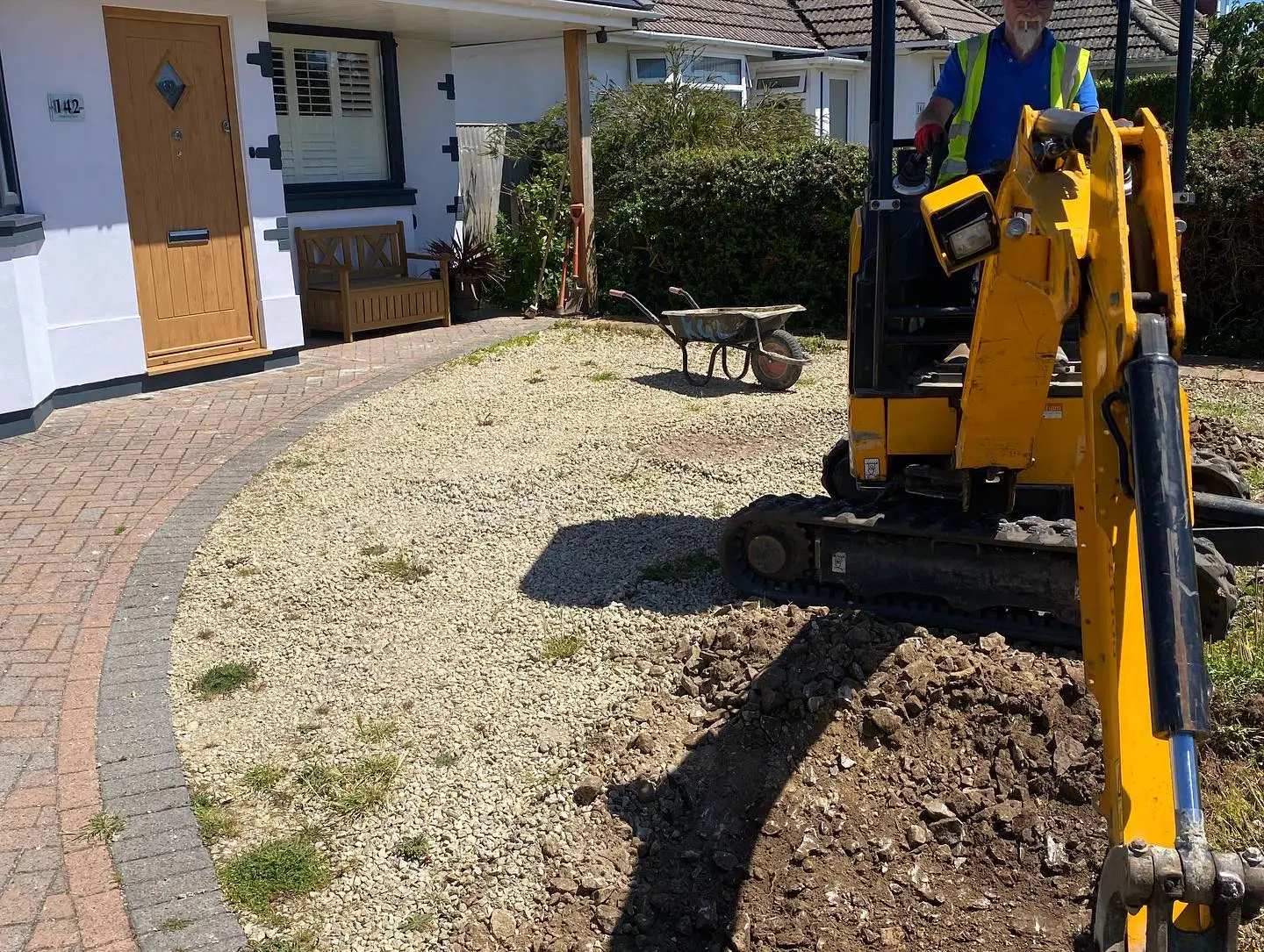
A groundworker prepares the ground before anything else gets built on it. That means excavation and muck away, getting levels right, laying and compacting a sub-base, and designing drainage so water goes somewhere on purpose. It is the work nobody sees once the driveway, patio or lawn goes down, and it is the reason that surface stays flat, drains properly and is still level in five years.
Most landscapers sub this part out. They lay what sits on top and bring someone else in to dig, level and drain underneath, which means two different standards meeting on the same job. That groundwork is kept in-house at Four Groundworks, done by a team holding CSCS cards, Street Works (NRSWA) qualifications, SSSTS, NVQ Level 2 and a Diploma in Groundworks, not passed to a subcontractor working to a different standard. Four Groundworks is led by Jacc, who has over 15 years' hands-on experience in groundworks and landscaping across Dorset and Hampshire.
On a typical job that starts with a site visit to see what's actually there, then excavation and muck away to clear the old ground, levels and a compacted sub-base to the right depth, and falls set so water runs off rather than sitting where it lands. Where the ground needs it, a percolation test sizes a soakaway properly instead of guessing. Everything underneath is covered by a two-year workmanship warranty, because that is the part that actually fails if it was done badly.
Why the Sub-Base Matters More Than the Surface
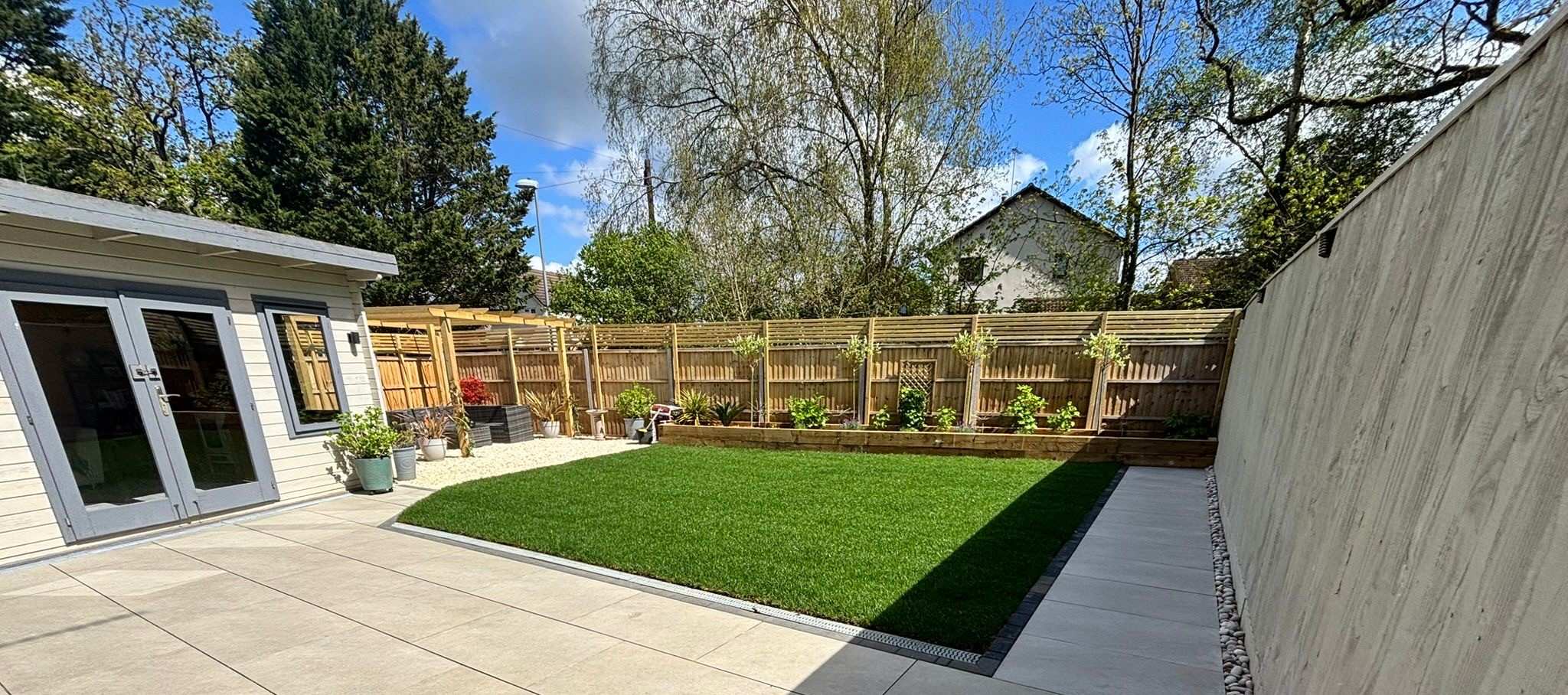
The visible finish is roughly the last stage of the job. What decides whether it survives its first winter is the layer nobody sees: dug to depth, compacted in layers, with falls set so water actually leaves. Get that wrong and no amount of care with the joints or the finish above it will stop it moving.
What This Actually Means for Your Job
The four things worth knowing before you get a groundworks quote.
The sub-base decides the lifespan
A patio or driveway is only as good as what's compacted underneath it. Skip that and it will move within a year or two, whatever sits on top.
Falls send water somewhere on purpose
Every surface is laid with a fall built in, so rain runs off to a drain rather than pooling on the slab.
Groundwork and finish come from the same team
Excavation, levels, sub-base and drainage are done in-house, not handed to a subcontractor working to a different standard.
Two years' cover on everything underneath
If it settles or shifts in the first two years, we come back and put it right.
How a Groundwork Job Actually Runs
The sequence behind every driveway, patio or garden we build, before the surface goes down.
Site visit and assessment
We look at what's actually there, the existing surface, the ground beneath it, and where water is currently going, before anything is priced.
Excavation and muck away
The old surface and enough ground beneath it comes out and is taken away, down to the depth the new sub-base needs.
Levels, sub-base and drainage
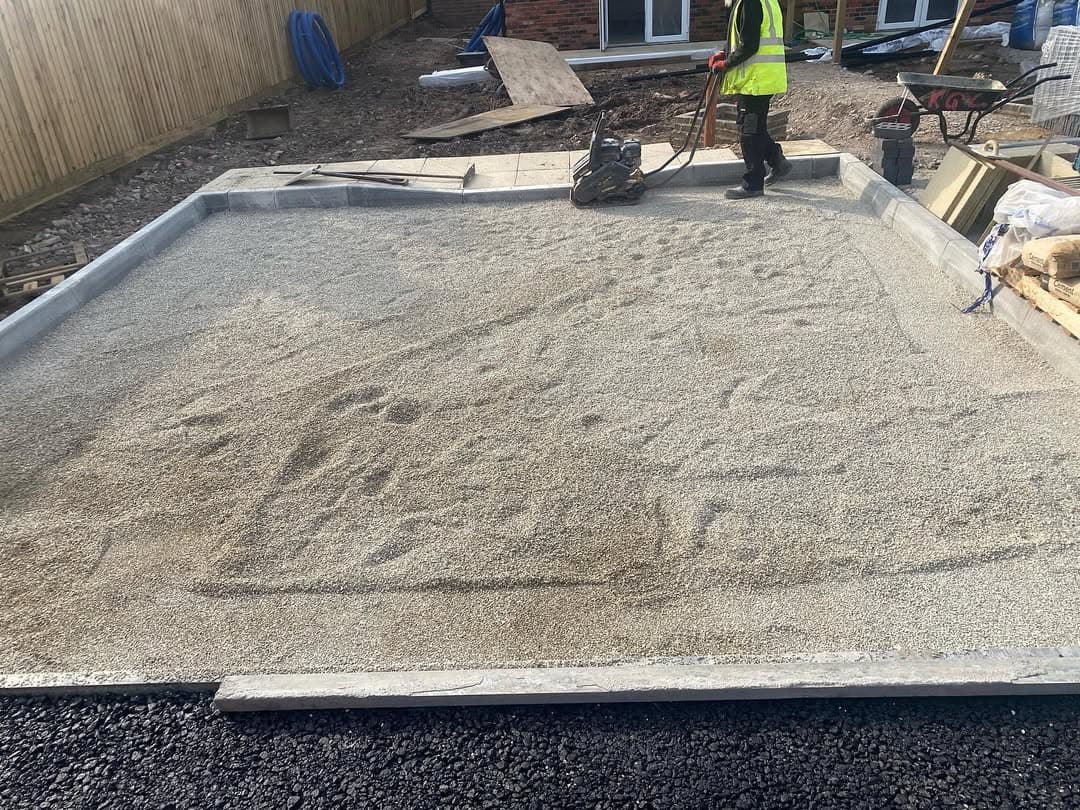
The sub-base is laid and compacted in layers to the right depth, with falls set and drainage designed in before anything goes on top.
Lay, finish and walk-round
The surface goes down, the site is left tidy, and we walk round it with you before we go, then again once it has had time to settle.
Groundworks Questions People Ask Us
The follow-on questions this guide tends to raise.
What is groundworks?
Groundworks is the work that happens before anything else gets built: excavation, levels, a compacted sub-base and drainage, whether that's under a driveway, a patio, a garden or a set of footings. It's what most people never see, and what decides whether the finish above it holds up.
What does a groundworker actually do on a driveway or patio job?
They dig out the old surface, get the levels right, lay and compact the sub-base, and set falls so water runs off rather than pooling, before anything goes down on top.
What is a percolation test, and do I need one?
It is a trial pit test that times how fast the ground takes water, and it tells us what size soakaway the ground actually needs rather than guessing. Worth asking about if your garden floods or you need building control sign-off.
How long does the groundwork take before the surface goes down?
It depends on the site and what's currently there, but most standard driveways are finished, surface included, inside a week.
Is the groundwork covered by a warranty?
Yes. Everything we lay, including what is underneath, is covered for two years. If it settles or shifts, we come back and sort it.
Related Groundworks Services
The work described on this page, ready to book.
 01
Groundworks & Civils
Excavation, levels, sub-base, footings and drainage, done in-house for homeowners, builders and developers.
Learn more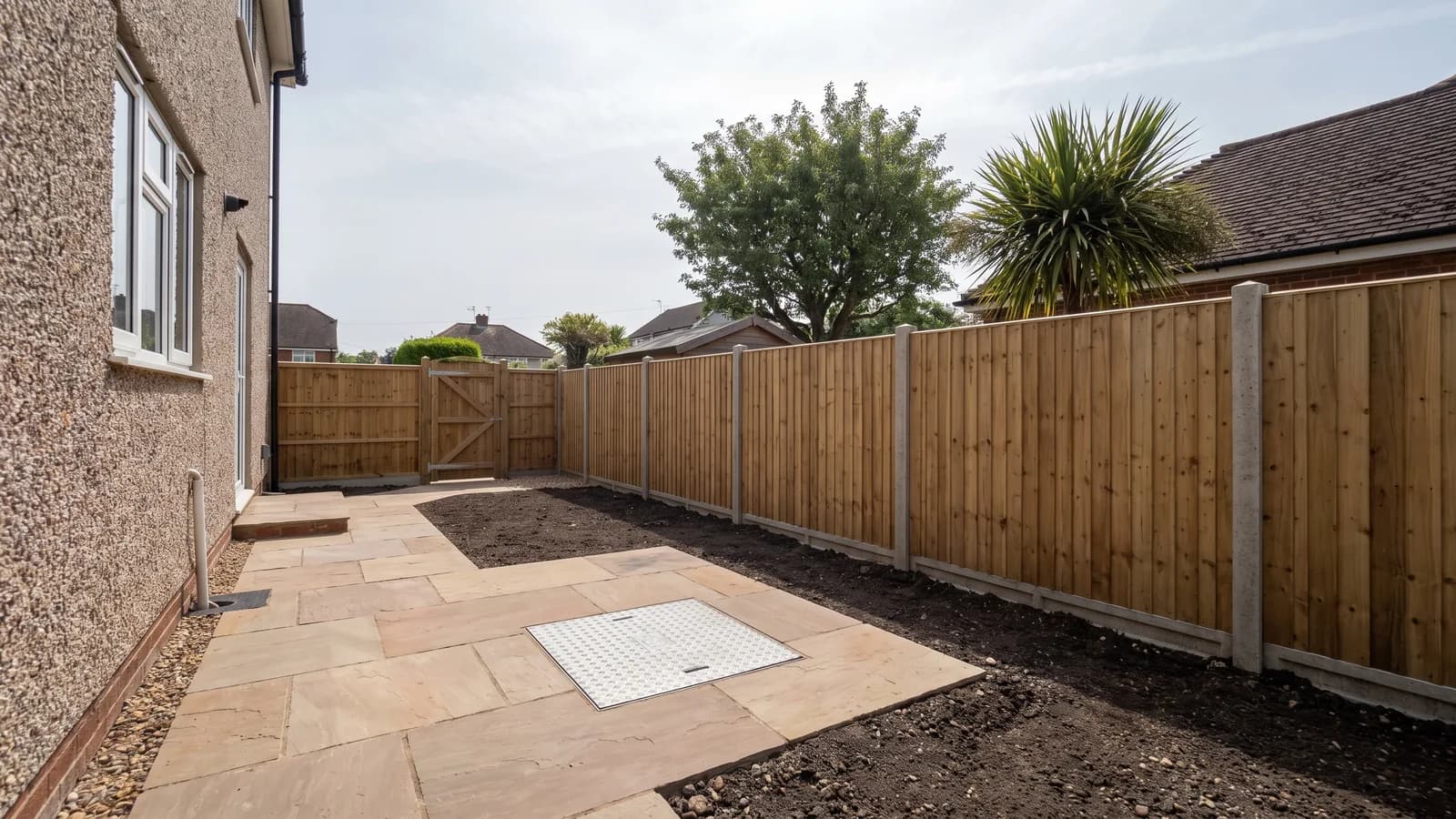 02
Drainage, Soakaways & Percolation Testing
Trial pits and a properly sized soakaway, so water is sent somewhere on purpose.
Learn more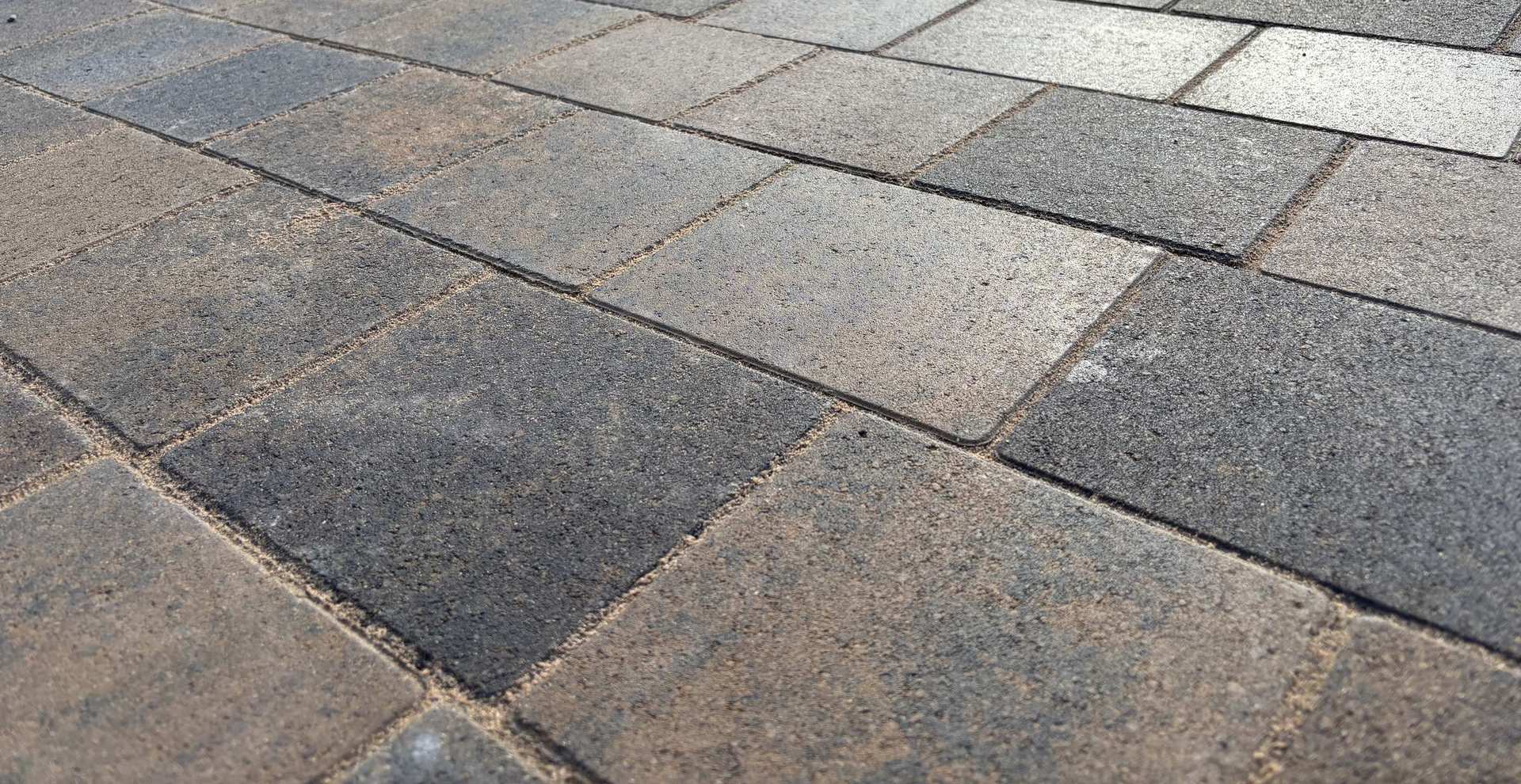 03
Driveways & Patios
Block paving, tarmac, concrete and porcelain, laid on the sub-base and drainage that keep it level.
Learn more
Get a free quote
Tell us what you need and we'll come back with a price. No pressure, no hard sell.
Prefer to talk? Call Four Groundworks & Landscaping on 07886 075828